
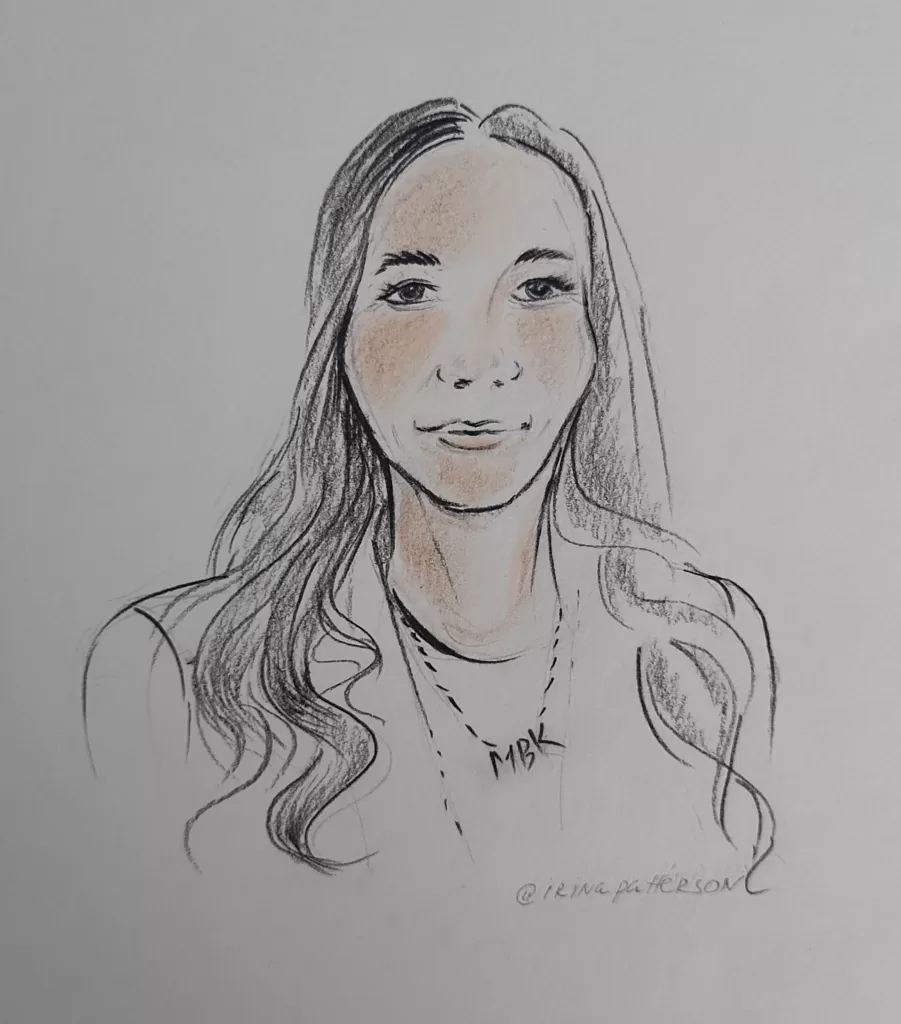

For Coconut Grove Arts Festival Board Member and Co-Chair-Elect, Michelle Barton King the path to the arts was never a straight line — but in hindsight, it was always inevitable.
Growing up in a Jamaican family where music, storytelling, and visual experience weren’t hobbies but a way of life, she developed an early and instinctive understanding of what the arts can do — how they gather people, bridge differences, and ignite something in the human spirit. Jamaica’s national motto, “Out of Many, One People,” wasn’t just a phrase she learned in school. It was a value she lived.
After earning her law degree, the demands of a legal career took center stage. But the desire to give back never left her. It was a trusted mentor, Mrs. Thelma Gibson — herself a longtime CGAF Board member — who opened the door, recommending her for a seat on the Festival’s Board of Directors. It was, by every measure, the right fit.
That spirit of service runs in the family. Her mother has spent more than 30 years leading the Thelma Gibson Health Initiative, a nonprofit dedicated to improving lives in low-income communities through health, housing, job skills, and economic stability. Michelle’s husband’s career has also been spent in the nonprofit arena. He is currently the President/CEO of the Collaborative Development Corporation, whose mission is to revitalize West Coconut Grove by creating attainable housing, fostering economic opportunity, and strengthening the social fabric of Miami.
Watching her family’s work up close shaped everything. Today, she channels that same drive across multiple fronts — as a board member of the Miami Bayside Foundation, supporting minority business and education, and as past Chair of United Home Care, which provides home health services to South Florida seniors and families. The Q&A below offers a closer look at the perspective she brings to CGAF — and the conviction that great art, like great community, belongs to everyone.
Q. You’ve been coming to the Coconut Grove Arts Festival since you were twelve years old. What eventually pulled you from the audience into the boardroom?
Growing up in Miami, the Festival was where I first really encountered art — not in a classroom, but out in the open air, surrounded by people from every walk of life. That stayed with me. As an adult, what drew me to leadership was the rare combination this Festival represents: art, culture, community, and history all converging in one place. I wanted to contribute strategically, to support both emerging and established artists, and to help protect something that has meant so much to so many people for so long.
Q. Coconut Grove has one of the most storied identities of any neighborhood in America. How does the Festival honor that legacy while staying relevant today?
The Grove’s roots run deep — shaped by its original Bahamian settlers, by decades of artists, writers, and free thinkers who chose to plant themselves here. Tennessee Williams, Jimmy Buffett, David Crosby, Madonna — the neighborhood has always attracted creative, independent spirits. The Festival carries that DNA. At the same time, it reflects the broader South Florida story: a place where influences from many cultures meet, where local traditions and global artistic perspectives share the same space. That’s why it has endured for more than six decades. Generations of families have attended together, artists return year after year, and the community has woven the Festival into the fabric of who Miami is.
Q. When you think about the Festival’s impact on artists and students, what comes to mind first?
There’s a moment from this year’s Festival that I keep coming back to. A first-time exhibitor — a veteran who had worked in graphic design for years but never quite found his footing as a working artist — sold his very first piece. He cried. And in that moment you understood everything: what it means to finally be seen as an emerging artist, to have a stranger connect with something you made and say, I want to take this home. That’s what this platform does. It doesn’t just give artists a booth — it gives them a career, a community, and in some cases, a turning point.
For students, the scholarships do something equally powerful. They reduce the financial weight of pursuing a creative education — tuition, supplies, living expenses — and give young artists the breathing room to actually develop their craft rather than abandon it out of practicality.
Q. Most people experience the Festival over a weekend. What would surprise them about what it actually takes to make it happen?
Almost everything happens before that weekend. Board members are volunteers, and we work year-round — not just during the three days on the bayfront. Every detail is deliberate: the safety of the environment, the quality of the experience for artists and attendees alike, the long-term reputation of the Festival itself.
One thing people rarely see is how the artist selection works. It’s a blind-jury process. Artists submit multiple pieces, and a panel — made up of artists, art educators, and others deeply embedded in the art world — scores each submission independently. The highest-ranked artists earn their invitation. There’s no favoritism, no shortcuts. The integrity of that process is something we guard carefully.
And underneath it all, the Festival is shaped and managed by a nonprofit — the Coconut Grove Arts and Historical Association — which means the proceeds don’t disappear after Presidents’ Day weekend. They fund arts programs and scholarships that have been changing students’ lives since 1963.
Q. What excites you most when you look at where the Festival is headed?
What excites me is the combination of staying rooted while continuing to grow. The artistic mission isn’t going anywhere — but we’re actively expanding what the Festival looks and feels like throughout the year. New events, deeper support for students and emerging artists, and a growing focus on collectors — both those who are just beginning to discover the world of collecting and those who have been part of this community for years. Art collecting shouldn’t feel exclusive or intimidating, and we want CGAF to be the place where that conversation opens up for a whole new generation.